

Ndakondwa (I’m Happy)
Larry Maluma
Afro Beat, Reggae
Safari Music – LMCD1970
Reviewed by Peter Winkler, 1 May 2014
Some years ago my family and I travelled to Tanna, a remote island in the Vanuatu archipelago and stayed in a village near Mount Yasur, the world’s most accessible active volcano. On the first night in our grass-hut accommodation a truck pulled up and the young men of the village converged to unload all the equipment and instruments needed to set up a rock band. I helped them plug everything in expecting them not to be able to play yet. They jumped on the instruments and proceeded to play just about every Bob Marley and the Wailers song in that magnificent canon of reggae masterpieces. Such is the impact of Marley, his music, his message and the ubiquitous nature of reggae music as a world wide cultural phenomenon.
Larry Maluma is a Zambian reggae artist based in Melbourne since moving to Australia in 1985.
He is a leading artist in the Australian Afro Beat and Reggae scene. Ndakondwa (I’m Happy) is his eleventh album. It’s a collection of 11 excellently produced tracks in which he sings in English and his native languages, Nyanja, Bemba and Tonga.
The band on these tracks is at the top of its game. The rhythm section, percussion, keyboards, guitars, backing vocals are all excellent and the big horn section is as good as any playing this style in the world.
Personally I much prefer it when Larry and backing vocalists sing in one of his native tongues. Very few Afro Reggae artists have mastered writing songs in English to the brilliant heights of Bob Marley or Peter Tosh.
Music in this genre rarely breaks new ground and why should it? There is value in producing roots music faithfully and Larry Maluma and his illustrious band do that beautifully.
I haven’t seen Larry Maluma performing live yet but next time he’s playing near me I’ll be there. I’m sure the live gigs are very uplifting.
My trip to Vanuatu was a memorable journey not least due to the nightly reggae concerts by the boys from Tanna. Reggae music is here to stay.
VIEW: Videos and interviews at www.youtube.com/results?search_query=Larry+Maluma
The Music Trust http://musictrust.com.au/

Independent
(Forte Magazine)
Shades of Bob Marley, Yothu Yindi and Santana are all present within Larry Maluma’s eleventh studio effort Ndakondwa (I’m Happy). Like smooth Jamaican rum, throughout all of the tracks on the album are many stories explored through both English language and Maluma’s native tongue.
The most positive element to this album is that it works in both loud and quiet moments. Whether you’re holding a house party and need to bring the beats or if you’re in downtime and relaxation mode, these songs have many elements of light and shade and spread a positive message throughout the lyrics.
The highlights for me are either the opener ‘I Can See a Rainbow’ or ‘Light Up My Fire’, which celebrates the true reggae musician lifestyle. If you are a reggae nut or like funky guitar lines, look no further.
Release: Out now via Safari Music
Written by Tex Miller Larry Maluma: Ndakondwa (I’m Happy) | Forte May 18, 2014
Popular music – Larry Maluma: Ndakondwa (I’m Happy)/ LP
First time listeners of Larry Maluma will be happy with Ndakondwa (I’m Happy) as they recognise reggae and its celebration. The album opens with song ‘I Can See A Rainbow’ a jubilation of the weather, sunshine and rain. ‘I Can See A Rainbow’ exults everything that would remind the listener of holidays, festivals, family, communities and the reggae summers of their past.
This eleventh album from Larry Maluma came from relistening to the quality outtakes of his 8th album recorded 10 years ago, and now they are released and able to shine in all their own glory. Zambian language is featured on many of the new Australian folk songs. ‘Ndakondwa’ the title is translated as ‘I’m Happy’ in text and four songs are also sung in vernacular interpreted by most audiences only by their English title and the tone of the songs. ‘Mpuluula’ is a traditional song sung to chorus without shout – along with ‘Mabvuuto (difficulties)’ – the lower volume used to convey sadness and information through song. While ‘Ndakondwa (I’m Happy)’ and ‘Koya (Go)’ is sung with rejoice as life anthems – and the listener understands a bit more of the language from the sound.
Former Zambian Larry Maluma uses the Jamaican developed music genre to discuss his life on the island of Australia that has been his base for 29 years. The reggae formula is used as a great way to communicate songs throughout the world, and like other world music genres, in Larry Maluma’s songs the beat makes people move when they can’t understand the language. The social consciousness storytelling element of reggae and folk songs is heard more clearly to wider audiences in such Larry Maluma titles as ‘Game Over’, ‘Speak Out’, ‘Believe In Yourself’ and ‘Homesick’. ‘Homesick’ discusses a longing to travel back to Zambia, “I had to go – I’m homesick, let me go home,” he sings along with the more literal needs of returning to a house. “We got the sun, we got the moon, we got the stars, we got the rain,” lists Larry Maluma in ‘I Can See A Rainbow’ as a celebration of our shared happiness that starts Ndakondwa album.
Local pub stalwarts and Australian music followers who don’t know Larry Maluma may be even happier when they find out this musician from Melbourne has supported Jimmy Cliff, The Wailers, Angelique Kidjo, and played some great folk and roots music festivals. Mal Webb plays trombone and slide trumpet on 4 tracks, and Nicky Bomba is credited as helping Larry Maluma flesh out the sound from the original album outtakes, at his Freeburg Station studio in country Victoria.
Alicia Bee enter through the gift shop | Misspiggyjournalist’s Blog 17 April 2014

Tusekelele (Let’s Celebrate)
Safari Music
Independent
Although this is far from his first release, Zambian-born Larry Maluma has largely gone under the mainstream radar thus far, which could change in an instant thanks to Tusekelele.
Taking a progressive approach to deep funk, roots and reggae (in much the same way as Set-era Youssou N’Dour, though with far greater dub overtones) Maluma has taken various complementary styles and rolled them into one – wrapping all of the tones and textures around what are essentially great pop songs. And, like Uganda’s Geoffrey Oryema, Maluma shakes things up further by singing in a variety of languages, adding to the grandness of the record’s overall feel.
Maluma’s rich voice has the necessary qualities to navigate reggae’s ups and downs, and although there’s the obvious nod to Bob Marley (the horns in Samba are melodically identical to those in Iron, Lion, Zion for instance), Maluma can flirt with the deep guttural lows of Prince Far I as well as he can smash those sweet Oryema-like highs… always making the right choice for the song at hand.
Mostly up-beat, but as politically concerned as it is celebratory, Tusekelele feels like a lot of thought went into it. The many layers of percussion don’t derail the solid flow of the songs, nor does Maluma sit back and coast on the wake of his horn section, as many vocalists of this style tend to.
For these and many other reasons, Tusekelele is one of the most impressive albums of 2009, and definitely one of the most bombastic albums to be associated with African music, of the last few years at least.
Awesome stuff from start to finish.
MIKE WAFER
X-Press Magazine
Tusekelele (Let’s Celebrate), Safari Music
Larry Maluma has contributed to broadening Australia’s perspective of African music since he came to make Melbourne his home back in 1985.
Four years on from his last album, the 2005 Makani Angu (My Story) which was considered his watershed album, the Zambian born singer/guitarist presents his ninth album Tusekelele (Let’s Celebrate). And, crucially it seems during the four years constructing his music, revisit his culture and wrote some of the new CD material. As with Maluma’s previous albums, he continues to espouse messages of hope, love and harmony through tribal beats and layers of percussion.
On Tusekelele Maluma melds afro-reggae rhythms and horns fashioning his own kind of roots music, and creating a multihued compote by singing in several different languages.
The album kicks off with the pulsating reggae of ‘Ndime-Syuumbwa (I Am The Lion)’, followed by the jazz-funk of ‘People Need Food’, which centres around the plight of the starving of the world.
Mid album, the title track ‘Tusekelele’ keeps the album’s buoyant presence with its reggae/ska laid groove.
The beguiling seventh cut beams reggae lightheartedness even if one does not comprehend the lyrical content of ‘Mbuli Ciyuni (Like A Bird)’ with its unison chorus and up-strummed guitars, which exudes positivity, and much like the rest of the album, is a sonic celebration.
Although Maluma has spent much of his time in the shadow of mainstream, with Tusekelele Maluma could nudge his way into focus.
Terry Broun Jr, Beat Magazine, 18 November 2009.

Makani Angu
(My story)
(Independent)
Larry Maluma is a quiet achiever who, since migrating to Australia from Zambia in 1986, has gone about establishing himself as one of the very few African-Australian reggae recording artists. A chart-topper in his native land, Larry has established a firm following in his adopted country via his previous eight releases – which include Hallelujah, Man and Woman, Nuff is Enough, Motion, Roots & Herbs and his most recent compilation, A Good Cause.
After a break from work in the studio, Larry has put together Makani Angu (My Story), which employs a wide range of musicians and is an instantly likeable compilation full of vibrant energy. Featuring trippy rhythms, tribal beats with a deluge of percussion and an irresistible energy, Makani Angu sees Maluma creating reggae music with several twists. Singing in combinations of English and Zambian languages – Tonga, Nyanja and Bemba – Maluma pieces together his individualistic strain of roots music.
Focusing on themes of racial harmony, equality and social cohesion, Makani Angu is accessible but always willing to take the listener by surprise. Whilst some of the tracks seem to employ simplistic lyrics – take for example ‘No Parking’, a song which centres on a person’s discontent over a particular vigilant parking inspector – each song is very much a statement. Whether the tracks are exploring night-time loneliness (‘Sleepless’) or the terrible pressure placed upon darker women to appear like European (‘Ma Ambi’), Maluma is a songwriter who doesn’t waste words or indulge in shallow sentiments. Indeed the album is infused with a healthy political vibe, with tracks such as ‘Every Bank Is A Prison’ speaking out in no uncertain terms against the encroachment of capitalist society. It is an album too of African solidarity and affirmation, with songs such as ‘African Dream’ painting pictures of the African landscape, culture and people.
This is an eminently enjoyable album that is well-produced and displays some true musicianship. Maluma is definitely an artist to be supported.
Sarah Norman
Beat Magazine, 30/03/04
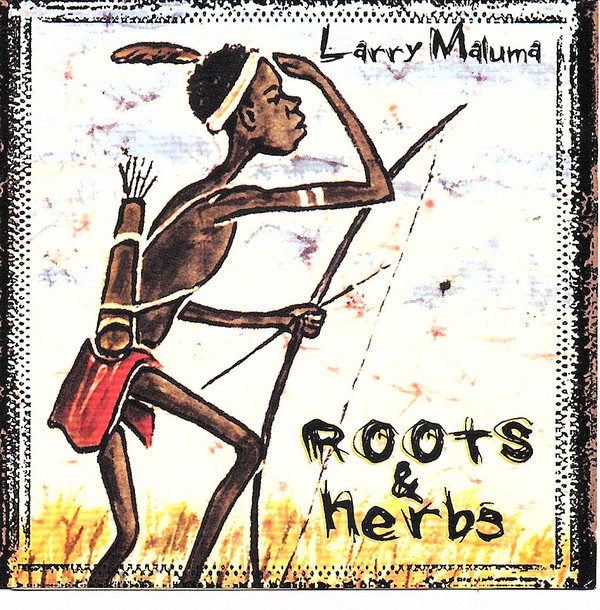
Roots & Herbs
From Zambia to Australia in 1985, Roots & Herbs is Larry Maluma’s 7th album. There’s something new and yet very familiar about this album. It’s Maluma’s own unique brand of ‘Roots’ music, brewed in an African pot and seasoned with herbs from around the world. He sings in a combination of English and African languages. Like most of his previous releases, Maluma records with some of Australia’s best musicians to create a combination of words like magic.
Review from www.potent.com.au
Larry Maluma
(Safari) ****
As with his previous six efforts since Confusion (1987), Melbourne-based Zambian musician Larry Maluma keeps it lyrically terse and musically rich. This is chunky roots-rock reggae spiced with his floating blues rock guitar over deliberate, beefy rhythms that include Nicky Bomba’s seductive one-drop drumming. Nothing could be more laconic than the mid-paced ‘Come With Me’, yet its spacious, free flowing excitement bubbles along in an addictively happy-go-lucky atmosphere. Maluma might intermittently make feel-good music, but that doesn’t mean it’s devoid of a philosophical stance. The ‘I-am-what-I-am’ title track is suggestive of his beliefs. On the preachy ‘Junk Food’, this contemporary African herbsman berates bad diet over a delightfully tight reggae cadence, while the impeccable backing voices of Angela Lybrandy and Annette Roche join in a trance-like call-and-response with Maluma.
Terry Reilly
The Age EG, Friday 6 October 2000
Listening to this I’m surprised that Larry Maluma isn’t more well-known. He’s a charismatic performer with a voice to match any international reggae star. I guess it’s an example at how blinded Australian audiences are to exotic sounds. Maluma’s sound is hardcore roots as the basslines slither around the chucking guitars and percussion. The lyrics have the same directness and simplicity of reggae’s 1970’s golden age. The title track has the feel at Rita Marley’s ‘One Draw’ or the Mighty Diamonds’ ‘Pass The Kutchie’. I presume it’s a smoking anthem, although you never know. The horn lines herald a different state of mind as they ascend and descend through the mix. ‘Nitandizindi (Help Me)’ is more aggressive – recalling the Exodus-era Wailers with its tense wah-wah guitar but moves from a fast-paced verse to a more plaintive chorus. The horns croon as Maluma wails like Peter Tosh over the top. ‘Stick Together’ is almost jail funk with its trumpet intro and its James Brown-like bassline. ‘Alma Boora (She/He Is a liar)’ is pure African township jive with more melody and chord changes than the straight reggae. ‘You Want To Dance’ is simple lyrically that it almost sounds corny but the tune is so infectious that in the mix the overall effect is very powerful.
David Trethewie, Beat Magazine, August 2000
More on Roots & Herbs…
“Definitely one of the most professional Australian Reggae Release of all Time”
Jessie I, 3PBSfm
“He’s a charismatic performer with a voice to match any International Reggae star.”
David Trethewie, Beat Magazine
“Absolutely Hotter Than Ever”
Jaslyn Hall, Triple J

Larry Maluma – Motion (Safari Music)
The thing I like about a Larry Maluma recording – despite the difficulty of understanding his native Zambian language when he refers to it – is the openness of his music. His rhythms are broad and expansive. Talk about positive vibrations, Larry Maluma thrives on them.
Probably the earliest examples of this openness is the engaging, broad, sweeping cadence of ‘Nzeelu Zoipa (Bad Brain)’ which occurs as early as track two. It is a call to stop negative thinking, to cast aside jealousy and petty banalities and the lilting horns help hammer home the point. But it doesn’t stop there because ‘What About Me’ breezes along courtesy of Darren Farrugia’s tremendous drumming, the driving horns of Greg Clarkson, Shane Hughes and Roger Schmidli and Phil Tucio’s deft keyboards. For mine, this is Larry Maluma’s most exciting recording. He has found a strident groove and brought home some great results, particularly the vibrant ‘Never See The Day’ which lyrically addresses the pitfalls of overwork.
Maluma’s lyrical concerns deal with old, home-spun values in many ways as well as looking at the actual problems of today. He is a lyrical philosopher without pretending to be too deep. And that is the beauty of his communication – the ability to get his message across without alienating his listeners. It is very easy to find his music so inviting. An example is the exodus-style return to nature as attested by Follow Me To The Hills replete with its dramatic, staccato opening form the potent horn section. It is true that this CD is horn-driven but I was taken by the arresting guitar intro of the title track which is anchored by Chris Bekker’s solid bass guitar. Larry Maluma makes full use of this track, not letting it sound similar to some of the others.
Since coming to Australia from Zambia, Larry Maluma has made five albums. He has soaked up inspiration by return trips to Africa and the quality of this CD may well be due in part to such inspirational odysseys. Whatever, Maluma has hit upon a vibrant, joyous sound for Motion and there is nothing here that won’t sound close to sensational at a live venue. (8.5/10)
Terry Reilly
Beat Magazine, Wednesday, 6 December 1995
As Happy As Larry – Motion (Safari Music)
Melbourne’s favorite Zambian purveyor of soul-tinged reggae has another trump card up his sleeve with this new independent released album Motion.
While flautists, percussionists, trombonists, trumpeters, saxophonists, backing vocalists (including Nichaud Fitzgibbon) and even Hammond organists lend a hand, this is the Larry Maluma show. Maluma composed, arranged and produced everything – though he did let Doug Brady mix it at Metropolis Studios.
The sound is clean, clear, melodic but, above all, bright. Sometimes the singer may sound as though he’s straining to reach a note but the sharp guitars, tight brass and Maluma’s relentlessly positive lyrics about the fundamental things in life make this one of those hopelessly optimistic discs that appeal to many people.
Men and women, truth and love, racial harmony and musical harmony all get airing as the singer stretches his tonsils around numbers like the wafting ‘Pretty Woman’ and the moody ‘Young Man’. Shades, too, of 10CC on reggae (“I don’t like it, I love it,” he sings). Worth a listen.
John Mangan, The Age, 25 January 1996
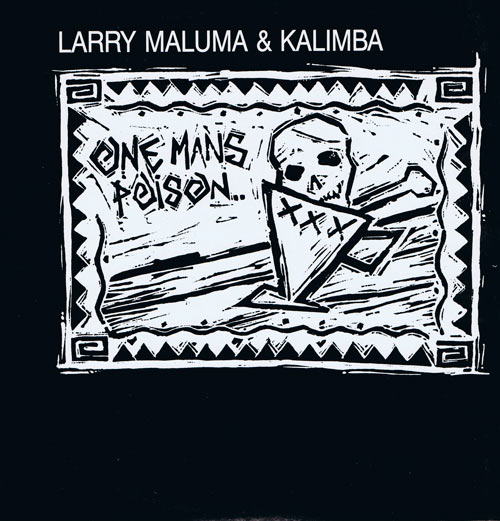
Larry Maluma & Kalimba – One Man’s Poison (Safari Music)
You may not expect to hear energetic, intelligent African and African-influenced music on a locally released independent album, but visiting Zambian Larry Maluma and his band Kalimba have really cut the mustard with this lushly textured long-player. Maluma, who has a string of records back home to his credit – including one which raced to No. 2 on the Lusaka hit parade – has produced an album that avoids the self-indulgent and repetitive excesses of much reggae and afro-rock. The irresistible ‘Uyu Teo’ on Side One was my favourite track (tremendous production) while ‘Street Jive’ also impressed, though the mix underplays Conrad Henderson’s bass, the keystone of the song’s urgent rhythm. The two most depressingly predictable numbers are the title-track, ‘One Man’s Poison’ and ‘Another Day’, which both seem to have been written with one eye on commercial radio.
John Mangan, The Age, Friday, 1 June 1990

ZAMBIA DAILY MAIL, 1984 Music Polls
THE MULEMENA Boys have dethroned the New Crossbones who have in the past years been winning the most of the awards in the ZAMBIA DAILY MAIL Music Polls.
For the 1984 polls the Mulemena Boys have grabbed five of the 12 slots, among them the Best Band, the Most Improved Band. The late rhythm guitarist and lead vocalist Brian Chibangu has been voted the Best Vocalist; their album “Tribute to Emmanuel Mulemena,” Best Album; their single “Bana Mayo Bambi” as the Best Single.
Except for picking third slot in the best band category, the New Crossbones have come out empty-handed.
The other surprise is the return of Paul Ngozi into the number one slot as the Best Lead Guitarist.
Clouds Disco, in 1982 dethroned by Bantu Disco of the Copperbelt, has reclaimed its slot as Best Disco, beating the new and posh night club, Moon City into second position.
Katako Lubula has emerged as the Best Drummer whilst Gideon Mulenga of the struggling to get back to life Witch has bagged the Best Bassist slot.
Another surprise is in the Best Solo Artistes category where Mike Nyoni has got away with the top votes beating Ackim Simukonda into second place.
Timmy Mvula of Zambia Broadcasting Services has been voted the best DJ of 1984; and Michael Jackson who was inactive last year has been voted Best Foreign Artiste.
The rest are the full results in each category and in order of merit:
- BEST BAND: The Mulemena Boys; Witch; New Crossbones; Directions.
- BEST LP: Tribute to Emmanuel Mulemena (Mulemena Boys); Victory (The Jacksons); Jermaine Jackson (Jermaine Jackson); Stand Up (Eric Donaldson).
- BEST SINGLE: Bana Mayo Bambi (Mulemena Boys); Bondate Siyanga (Mike Nyoni); Chakolwa (Larry Maluma); Ingongo (Mkandawire Wapolina); and Ifintu Ni Bwangu (Mike Nyoni).
- BEST VOCALIST: The late Brian Chibangu of Mulemena Boys; Ackim Simukonda; Mike Nyoni, Patrick Chisembele; and Larry Maluma.
- BEST LEAD GUITARIST: Paul Ngozi; Mike Nyoni: Joseph Mutemba of the Mulemena Boys; Chris Mbewe, former Witch; and Rikki Ililonga.
- BEST BASSIST: Gideon Mulenga; Derek Moyo; Gift Chisha of the Mulemena Boys; Sikota Yeta (Maoma); Ricky Banda.
- BEST DRUMMER: Katako Lubula, now playing with Fame; Peter Lungu, former Witch; Boni Banda; Watts Lungu; Eddie Ngoma.
- MOST IMPROVED BAND: The Mulemena Boys; Maoma Band; The New Generation; Super Vina; Witch.
- BEST SOLO ARTISTE: Mike Nyoni; Ackim Simukonda; Rickki Ililonga (though he was inactive); Larry Maluma and Nashil Pichen Kazembe shared the position; Smokey Hangala.
- BEST FOREIGN ARTISTE: Michael Jackson; David Joseph; Donna Summer; Tina Turner; Lionel Richie.
- BEST DJ: Timmy Mvula; P. Funk; Man Child (Teddy Daka); Ben Kangwa; Peter Mweemba.
Hats off for the winners XXXXX
Zambia Daily Mail, 1984